Why You Can’t Remember the Middle of Something Painful
A part of you may be keeping that memory from you, and I’ll show you how to work with it gently.

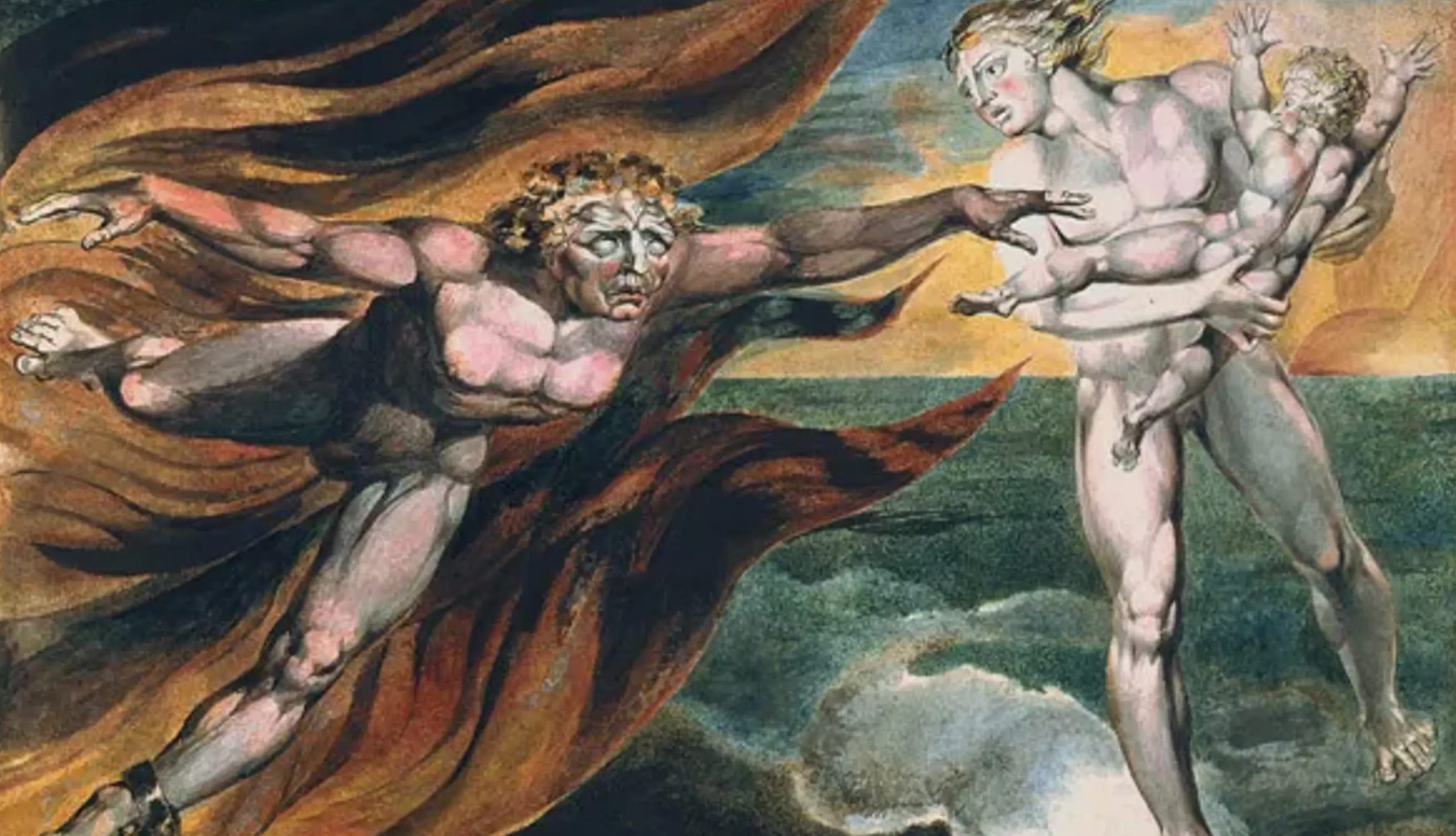
The part of your mind that protects you from what happened is the same part that beats you up about it afterward.
That’s what the Jungian analyst Donald Kalsched found. A Jungian analyst is a psychotherapist trained in Carl Jung’s methods, and in 1996 Kalsched published a book on this, The Inner World of Trauma. He kept seeing the same inner figure in the dreams of the people he worked with, and it was doing two jobs at once. In his words, it was “a protector and persecutor in one.”
In Kalsched’s account, that same figure is behind a lot of forgetting. Maybe you’ve gone to tell someone about something painful and found that the middle of the story is just gone, or that you remember how it felt and none of the details, and you’ve asked yourself, why can’t I remember something that big? Kalsched has an explanation for that, so let’s walk through it....
Before I go any further: I’m not a therapist. Kalsched was writing about his own clinical patients, and I’m not going to tell you that what he saw in them is what’s going on in you. I’m passing along what he found because, in all my reading on the great forgetting, almost nothing explains the personal kind as well as he does.
What did Kalsched see in his patients’ dreams?
The figure he describes “jealously cut them off from the outer world, while at the same time attacking them with merciless self-criticism and abuse.” At other times, the same figure showed up as “a kind of guardian angel, soothing and protecting a childlike part of the self inwardly while at the same time hiding it shamefully from the world.”
It could protect or persecute, he wrote, “sometimes alternating back and forth between them.” The figure belongs to what Kalsched describes as the psyche’s “self-care system,” and he often writes it with a slash, “Protector/Persecutor,” or “Daemon/Protector,” because he’s talking about one figure, not two. He even imagined what it would say if it could explain itself. One line of it goes like this: “Never again will it be this helpless in the face of cruel reality.” The “it” there is the hurt child’s “personal spirit,” in Kalsched’s words. So at some point, that part of you made a promise that you would never be that helpless again, and it has been keeping the promise ever since, by any means necessary.
Why does the protector make you forget?
One of the ways it keeps the promise is by keeping the worst of what happened away from you. In the people Kalsched worked with, the painful material got split into separate pieces, and between those pieces, he wrote, “amnesia barriers have been erected.” So in his account, a missing piece of the story doesn’t fall out on its own. Something puts up a wall.
Kalsched also compared the self-care system to the body’s immune system: “Like the immune system of the body, the self-care system carries out its functions by actively attacking what it takes to be ‘foreign’ or ‘dangerous’ elements.” And just as an immune system can end up attacking the very body it’s supposed to protect, he wrote, the self-care system can turn into a “self-destruct system.”
Follow that all the way through. You got hurt, a part of you swore you’d never be that helpless again, and the way it keeps that promise, years later, is by tearing into you every time you reach for something new. It does it in your own voice, too. You never agreed to that arrangement, and nobody asked you.
And according to Kalsched, you can’t talk it out of the job either....
Why won’t the protector listen to reason?
Kalsched is blunt about it. The trouble, he writes, is that the “Protector/Persecutor is not educable.” He explains that this defense “does not learn anything about realistic danger as the child grows up,” so “Each new life opportunity is mistakenly seen as a dangerous threat of re-traumatization and is therefore attacked.” I don't believe he's right about that. It's stubborn, but it can be negotiated with if you know how.
He wasn’t the first to notice how stubborn it is. Kalsched points out that as early as 1920, Sigmund Freud was shaken by how hard a “daimonic” force in some patients resisted change.
I think arguing with it is a waste of your breath. If anything gets through to it, it’s actively making it feel safe enough to release its hold over you. It has to trust you enough to let you in. Fighting it, like fighting your own shadow, never works.
Why does Kalsched keep calling it daimonic?
Kalsched says the popular explanation, that the cruel inner voice is a copy of whoever hurt you that has “possessed” your inner world, is “only half correct.” His reason: “The diabolical inner figure is often far more sadistic and brutal than any outer perpetrator.” So he concludes that the trauma sets loose a force inside the psyche, and he calls it “an archetypal traumatogenic agency within the psyche itself.” He also tells you why he picked the word. The inner figure in his patients’ dreams was such a powerful “force,” he wrote, “that the term daimonic seemed an apt characterization.”
Then he tells you what it looks like in his patients’ dreams: “a diabolical axeman, a murderer with a shotgun, a mad doctor, a menacing ‘cloud,’ a seductive ‘food demon,’ or as the Devil himself.” He describes people caught in its loops as living “almost as if the individual were possessed by some diabolical power or pursued by a malignant fate.” He gives all of Part II of the book to fairy tales and myth, because, as he puts it, “mythology is where the psyche ‘was’ before psychology made it an object of scientific investigation.”
Why would you forget your own spiritual experiences?
In 2022, the philosopher Joseph Felser came at forgetting from a completely different direction. He’d found some of the most powerful dreams of his life in his old journals from the early 1990s, and he had no memory of having had them. When he asked himself why, he landed on fear: “The mechanism which closes the curtain, after we enjoy what philosopher Bernardo Kastrup calls our ‘brief peeks beyond,’ is the fear instinct.” Felser also quotes Alan Watts, who wrote that there is a “taboo against knowing who you are.”
Felser was writing about spiritual experiences and Kalsched about trauma, so I’m not putting them in the same box. I’ll just point out that in both of their accounts, the part of you doing the forgetting is scared, and it believes it’s helping.
How do you work with the part of you that makes you forget?
Thank it, out loud or on paper, for trying to protect you. Something like “I know you were keeping me safe, and I’m safe enough now to look at a little of this.” You’re not giving it orders. You’re letting it know you see what it was doing.
Stop forcing the missing pieces. Kalsched says the protector reads every new opportunity as a threat. If something comes back on its own, write it down with the date, and leave the rest alone for now.
When the “you should have known better” voice starts up and you catch yourself in the self-blame again, write down exactly what it says, and then write one true fact underneath it, like “I didn’t have the information then that I have now.” It talks to you in verdicts, so answer it with facts.
Give it some small proof that not every new experience is suspect. Kalsched says the protector reads every new opportunity as a threat, so pick something new and tiny this week, like a different route to work or a call to someone you’ve been meaning to call, and let the protector watch it go fine.
And if this brings up more than you can hold by yourself, please find a trauma-informed therapist to work through it with. That’s what they’re trained for.
What did you think of Kalsched’s idea that the protector and the critic are the same part of you? Tell me in the comments.
If the same thing keeps slipping out of your mind every time you try to deal with it, we can work on it together. Book an hour of spiritual life coaching with me on Zoom, and when you book, tell me what keeps slipping, so we start there. By the end of the hour, you’ll know what you’re going to do about it, and when and how.
Discussion about this post