Venus Is Direct, and Now You Know Who Showed Up for You
The oldest story about Venus tells you what to do with the people who didn’t miss you.

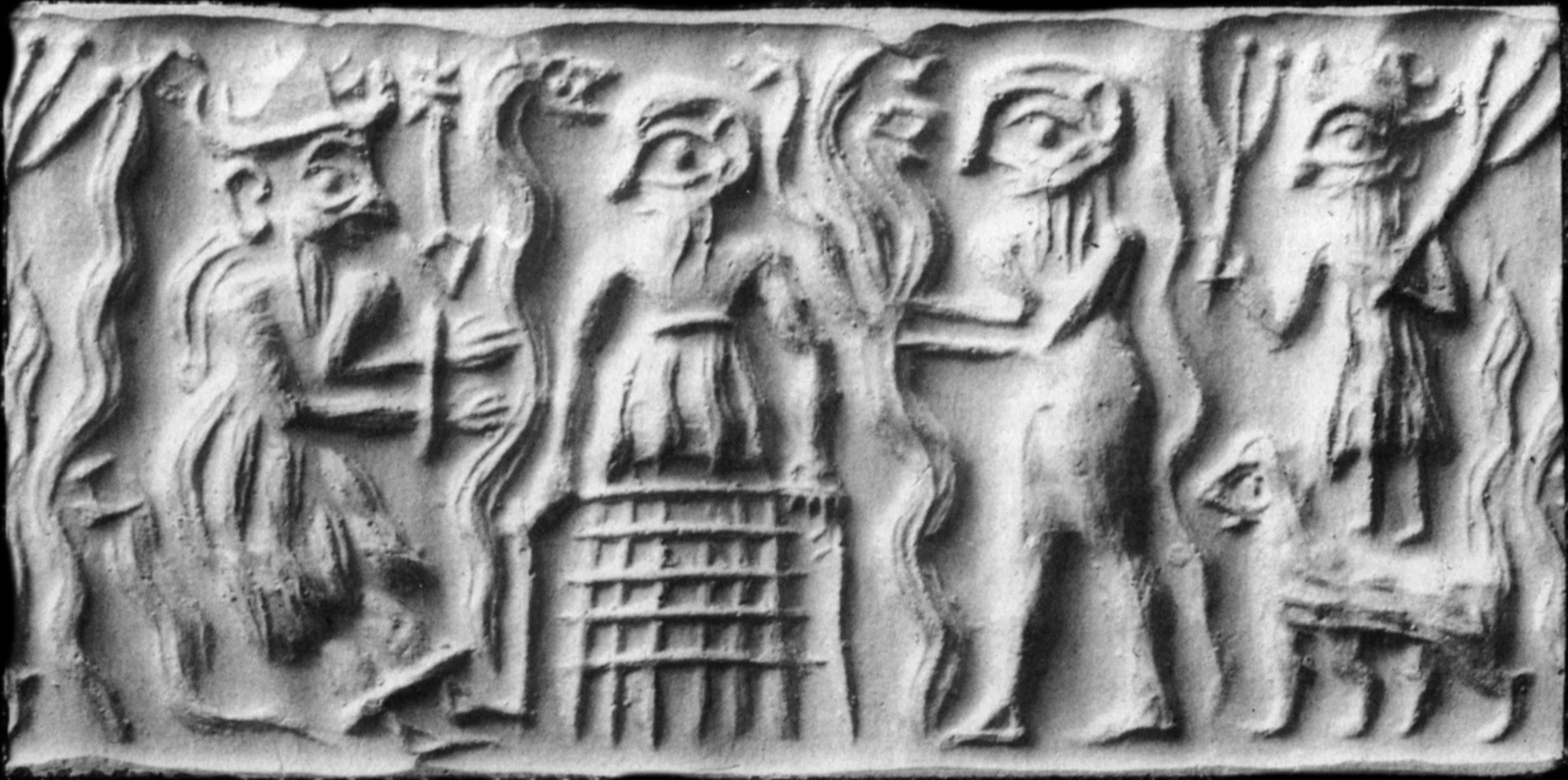
Venus spent the last six weeks moving backward, and the oldest story we have about the goddess is about a woman who loses everything, dies, comes back, finds she has been betrayed, and hands her husband over to the demons.
So if you’ve lost things in your love life since October that you never thought you’d lose, you’re in very old company....
Where has Venus been since October?
Venus started moving backward on October 3, while it was still in Scorpio. On the night of October 23, at 11:43 PM Eastern, it passed between the Earth and the Sun and disappeared from the evening sky, and two days later, on October 25, it slid back into Libra. When it showed up again, it was on the other side of the Sun, rising in the east before dawn as the morning star. Then, at 7:27 PM Eastern on Friday, November 13, Venus stopped and turned direct at 22 degrees and 52 minutes of Libra. It moves back into Scorpio on December 4.
If you go outside before sunrise this week and look east, you’ll see it. Apart from the Moon, it’s the brightest thing up there.
People have been watching Venus vanish and come back for a very long time. The Babylonians kept a record called the Venus Tablet of Ammisaduqa, which lists the days Venus was first and last seen on the horizon over 21 years. The copy in the British Museum, tablet K.160, was made at Nineveh in the seventh century BC, about 1,000 years after the observations it records. So they were tracking the exact night she went missing and the exact morning she came back.
Who was Venus before the Romans called her Venus?
The Sumerians called her Inanna. In Gods, Demons and Symbols of Ancient Mesopotamia, the Assyriologists Jeremy Black and Anthony Green describe her as the goddess of love and sex, of war, and of “the planet Venus, the morning and evening star.” They also write that in no tradition did she have a permanent husband. (Keep reading.)
The closest thing she had to one was Dumuzi, a shepherd who became king of her city, Uruk.
How did a shepherd end up on Inanna’s throne?
The Sumerians wrote love songs about the two of them. The translation I’ve cited since 2021 is by the storyteller Diane Wolkstein and the Sumerologist Samuel Noah Kramer, published in 1983 as Inanna, Queen of Heaven and Earth.
In the courtship songs, Inanna’s brother Utu, the sun god, tells her that her bridegroom will be Dumuzi the shepherd. She doesn’t want him. She wants Enkimdu, the farmer, because the farmer grows flax for her clothes and barley for her table, and the shepherd’s clothes are coarse and his wool is rough. Dumuzi argues his own case anyway, and her mother, Ningal, finally tells her to “open the house.” So Inanna bathes, puts on her lapis beads, and opens the door.
From there, the songs get VERY explicit. “Who will plow my high field?” Inanna asks, and Dumuzi tells her he will. Then she calls for the bed: “Let the bed that rejoices the heart be prepared! / Let the bed of kingship be prepared!”
That’s the bed where Inanna anointed Dumuzi to become king. Afterward, Inanna decrees his fate: “In battle I am your leader, / In combat I am your armor-bearer, / In the assembly I am your advocate, / On the campaign I am your inspiration.” She tells him he’s fit “to sit on the lapis lazuli throne” and “to cover [his] head with the holy crown.”
So the throne and the crown were hers to give.
Is this where the sacred marriage started?
The Greek words hieros gamos mean “holy marriage,” and in Greece they first meant the marriage of Zeus and Hera. Scholars use them now to denote a ritual marriage between a god and a human, and the oldest written record of one comes from Sumer. It’s Inanna and Dumuzi.
Sumerian kings reenacted that marriage. The king took Dumuzi’s part, and a priestess most likely took Inanna’s. A hymn written for Iddin-Dagan, a king of Isin, around 1950 BC, describes the whole rite, and it ends with the two of them on the holy bed and the blessing of the land that followed. Samuel Noah Kramer wrote a book about it in 1969, The Sacred Marriage Rite, and he wrote that the rite was celebrated “joyously and rapturously” for over two thousand years.
According to the Assyriologist Piotr Steinkeller, a king of Sumer could take part only if he held the office of en of Uruk and the title “spouse of Inanna.” So in Sumer, a man became king by becoming her husband. Kingship was something Inanna bestowed upon him.
Scholars still argue about the details, including whether the king and the priestess had sex or only acted it out. The Assyriologist Douglas Frayne argued in 1985 that the rite was part of installing new high priestesses, the entu.
The descent of Inanna looks like a record of what a priestess went through in her initiation: stripped of everything at the gates, a symbolic death, three days in the dark, and a return. And I think the sacred marriage was where that initiation ended, the moment the woman who came back up was joined with her other half, above and below.
What happened to Inanna in the underworld?
The poem about what came next is the Descent of Inanna, and in Wolkstein and Kramer’s translation it opens like this: “From the Great Above she opened her ear to the Great Below.”
Inanna decided to go down to the underworld, where her older sister Ereshkigal was queen. Before she left, she told her minister, Ninshubur, what to do if she wasn’t back in three days.
There were seven gates on the way down, and at every one, the gatekeeper took something from her. At the first gate, her crown. Then the small lapis beads at her throat, the double strand of beads on her breast, her breastplate, her gold ring, and her lapis measuring rod and line. At the seventh gate, they took her royal robe, and she walked into her sister’s throne room “naked and bowed low.”
Every time something came off, she asked what was happening. And every time, the answer was some version of “the ways of the underworld are perfect, and you don’t get to question them.”
Then the judges of the underworld surrounded her, and her sister “fastened on Inanna the eye of death.” Inanna “was turned into a corpse, / A piece of rotting meat, / And was hung from a hook on the wall.”
Three days and three nights went by.
Who showed up for her?
Ninshubur did exactly what she’d been told to do. She mourned for Inanna, beat the drum for her, and went from god to god asking for help. Enlil said no. Nanna said no. Then Enki, the god of wisdom, took the dirt from under his fingernail, made two small creatures out of it, and sent them down with the food of life and the water of life. They sprinkled both on the corpse, and Inanna got up off that hook.
But nobody leaves the underworld for free. The judges let her go on one condition - she had to send someone down in her place. So a crowd of demons followed her back up to collect.
The first person they found was Ninshubur, dressed in sackcloth, and they wanted her. Inanna wouldn’t let them have her. Next they found her son Shara, the one who sang hymns to her, in sackcloth too, and she wouldn’t give him up. Then her son Lulal, also in mourning, and she said no a third time.
Then they got to Uruk and found Dumuzi, “dressed in his shining me-garments” and up on his “magnificent throne.” That’s the throne she gave him.
Inanna had been stripped at seven gates, killed by her own sister, and left hanging on a hook for three days. Her minister was in rags. Her sons were in rags. And her husband, the man who only had a throne because she married him, was dressed up and enthroned like nothing happened.
So she gave him the look. “Inanna fastened on Dumuzi the eye of death. / She spoke against him the word of wrath. / She uttered against him the cry of guilt: / ‘Take him! Take Dumuzi away!’”
That’s the same eye of death her sister gave her downstairs, in the same words, and now Inanna was the one giving it. She kept EVERY person who had mourned her, and she handed over the one who hadn’t.
Dumuzi ran, and the sun god Utu helped him get away for a while, but the demons caught up with him. In the end his sister, Geshtinanna, offered to go down in his place, so Dumuzi spends half of every year in the underworld, and Geshtinanna spends the other half.
Didn’t the Greeks tell a story like this?
In the Homeric Hymn to Demeter, Persephone is picking flowers in a meadow when the ground opens and Hades, the god of the underworld, drives up in his chariot and takes her down with him.
Her mother, Demeter, doesn’t wait around in her best clothes to see what happens. She searches the earth for nine days with torches in her hands. When she finds out where her daughter is, she stops the grain from growing, and she keeps it from growing until the gods give Persephone back. Nobody on Olympus gets their offerings until Demeter gets her daughter.
Persephone does come back up. Before she leaves, though, Hades “secretly gave her sweet pomegranate seed to eat,” so that she couldn’t stay away from him for good. Because she ate it, she has to go back down for a third of every year. (In the version the Roman poet Ovid told later, in his Metamorphoses, Jupiter splits the year in half, so Persephone gets the same deal as Dumuzi.)
Put the two stories next to each other, and they show you the same two kinds of people. One kind turns the whole world upside down to get you back. Ninshubur goes from god to god, and Demeter shuts down the harvest. The other kind is up on the throne in his good clothes, or he’s the one who slipped you something on the way out so you’d have to keep coming back to him.
What does this have to do with Venus direct in Libra?
Venus is the planet astrologers connect with love, beauty, money, and what you value, and Libra is the sign of the scales, of what’s fair between two people. From October 3 to November 13, Venus went backward and then disappeared from the sky. If you spent those weeks losing things you thought were part of you - an assumption about someone, the version of a relationship you’d been telling yourself was fine, the way you’d been measuring whether you were loved enough - you went through your own gates.
Now Venus is direct and rising every morning. You’re coming back up, and on the way up, you got to see exactly who mourned for you and who stayed on the throne the whole time.
Back in February 2024, I posted a channeled message titled “Let Them Be Wrong About You. You Have Nothing To Prove To Anyone.“ That one goes double for Dumuzi. You don’t owe the people on the throne a long text explaining what you went through. They had three days to notice, and they chose to do nothing.
What do you do now that Venus is direct?
Notice the people who checked on you between October 3 and November 13, the ones who called, showed up, or sent something without being asked. Those are your Ninshuburs. Your ride-or-dies. Tell them thank you this week, and keep them close the way Inanna did.
Notice the people who didn’t notice anything was wrong. You don’t have to do anything dramatic with that. Just call your own energy back to you and stop spending your best energy explaining yourself to the people on that list.
Look at whatever you’ve been handed on your way out of a bad stretch, the apology that comes with strings, the “let’s just talk,” the one last favor. That’s the pomegranate seed. You don’t have to eat it.
Pick one thing you lost at your own seven gates that you aren’t taking back. For many, it’s the measuring rod - the habit of keeping score to prove we’re loved enough. Leave it down there.
And go outside before sunrise one morning this week and find Venus in the east. It takes two minutes, and it’s the same light the ancients were recording when they etched her movements into clay.
Which of the seven things Inanna gave up at the gates do you think was the hardest to lose? Tell me in the comments.
If something was taken from you and you want to know whether it’s coming back, ask me. Send me up to three questions for a Full Divination Reading, and you get a written answer to each one, from the cards, the numbers, the runes, and my shuffled music library, so you know what you can do about it from here. It’s $50 instead of the regular $144, delivered within three business days.
The measuring rod and line seems like it would be hardest to lose, although the story implies that the robe was the most important. But the measuring rod would have been a kingdom-wide standard, potentially affecting every piece of cloth, length of timber, or plot of land.
“Notice the people who checked on you between October 3 and November 13, the ones who called, showed up, or sent something without being asked. Those are your Ninshuburs. Your ride-or-dies. Tell them thank you this week, and keep them close the way Inanna did.”
I looooove this!!!