Who Is Running Your Life While You’re on Autopilot?
Gurdjieff said that if you tell people they can’t remember themselves, they get angry. Try it on yourself first.

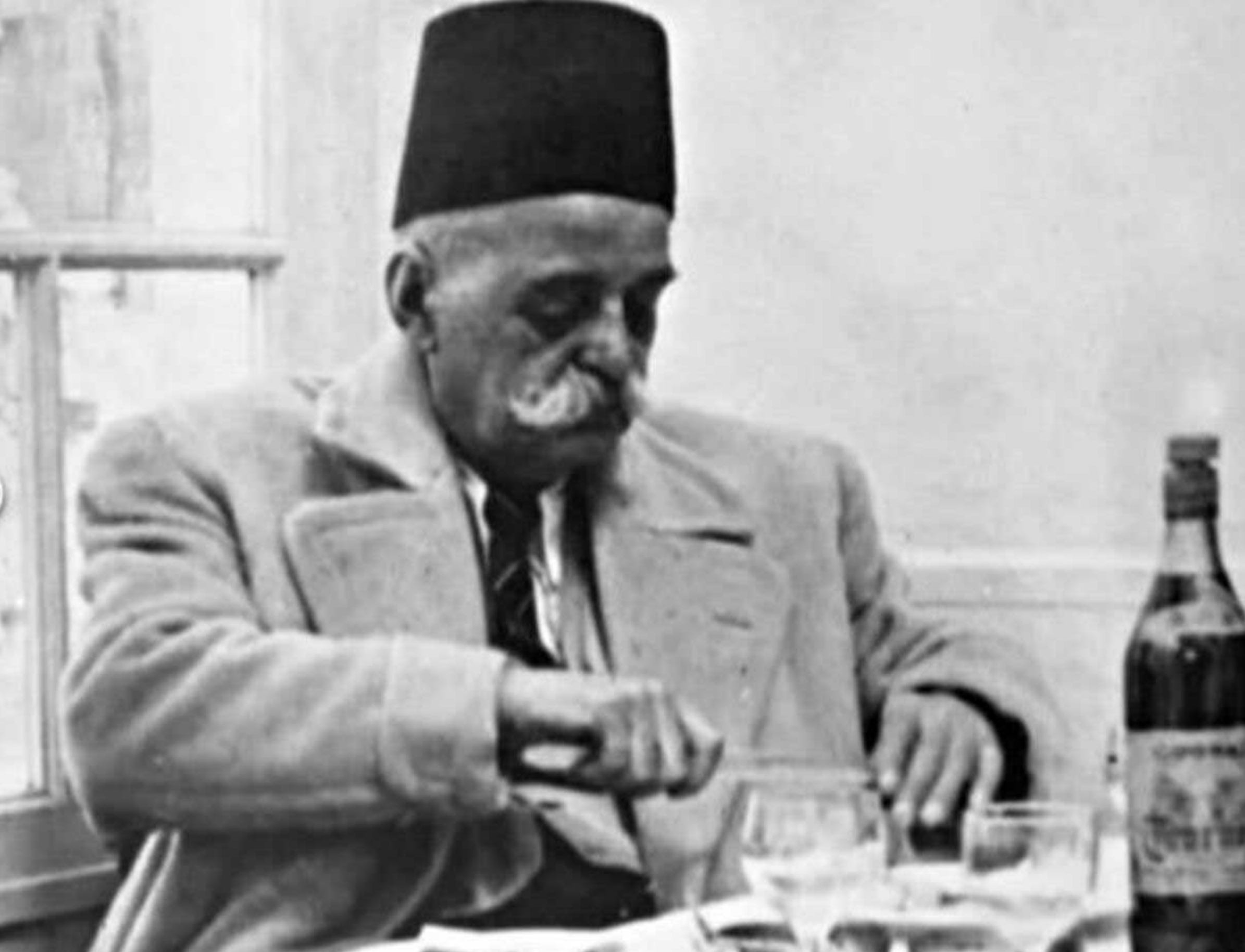
You were on autopilot for most of today, and if George Gurdjieff were standing next to you, he’d tell you that you didn’t notice a minute of it.
The drive to work, the texts you answered, the argument you had in your head with somebody who wasn’t even there.... Gurdjieff put the whole thing in four words: “Man is a machine.”
Decades later, Carlos Castaneda wrote that the mind running you doesn’t even belong to you.
And in between, in a sound booth at the Monroe Institute, a channeled source known as the Friends said that “someone already is running” your life.
A mystic in wartime Moscow, a Castaneda book, and the Monroe archive agree on this, all the way down to what’s at stake when you die....
What did Gurdjieff mean when he said man is a machine?
P. D. Ouspensky was Gurdjieff’s student. He wrote down Gurdjieff’s talks in St. Petersburg and Moscow from 1915 to 1917, and they were published in 1949 as In Search of the Miraculous.
In one of those conversations in Moscow, Ouspensky kept asking what a person could do to change, and Gurdjieff kept telling him nothing. “Man is a machine,” he said. Your words, your actions, your thoughts, and your feelings all come from outside influences. “Everything happens.” In his view, nobody does anything. Ouspensky pushed one more time and asked if there was nothing, absolutely nothing, that could be done. Gurdjieff said, “Absolutely nothing.”
But he didn’t leave it there. “It is possible to stop being a machine,” he said, “but for that it is necessary first of all to know the machine.” And then: “When a machine knows itself it is then no longer a machine, at least, not such a machine as it was before.”
What is self-remembering?
Self-remembering was Gurdjieff’s way of getting to know the machine, and it’s one of the central practices in his system, the Fourth Way. Ouspensky explained it with a drawing of an arrow. When you look at something the ordinary way, he wrote, “my attention is directed towards what I observe.” That’s one arrowhead, pointing out at the thing. When you remember yourself, “my attention is directed both towards the object observed and towards myself.” Now the arrow has two heads, one pointing out at the world and one pointing back at you.
Ouspensky called this “division of attention.” Part of you stays on you while the rest reads the email or washes the dish.
It sounds easy. Try it for one minute and you’ll understand why Gurdjieff looked at his group of students and told them, “you do not remember yourselves.” He also said that if you tell people this, they either get angry or decide you’re a fool.
What did Castaneda mean by a foreign installation?
Carlos Castaneda’s last book, The Active Side of Infinity, came out from HarperCollins in 1998, the year he died. His teacher, don Juan, tells him that every human being has two minds. The first one is “totally ours,” and “it is like a faint voice that always brings us order, directness, purpose.” The second one “is a foreign installation. It brings us conflict, self-assertion, doubts, hopelessness.”
According to don Juan, predators he calls the flyers put that second mind there. “They gave us their mind!” he says. “Do you hear me?” His way out is discipline and inner silence. He says the old sorcerers of Mexico “taxed the flyers’ mind with inner silence,” and when they did, “the foreign installation would flee.”
In my 2021 post on the information war, I called the media spellcasting, and I wrote, “When you intentionally break the medium, you break the spell.” Don Juan blamed the flyers. I think a good chunk of ours comes in through whatever screen is on in the background blaring the news at you while you’re not paying attention.
What did the Friends say in the Monroe Institute’s booths?
In the Monroe Institute’s Explorers program, which ran from 1982 to 1991, an Explorer went into a deep meditative state in a booth and talked with a monitor over headphones and a microphone. One Explorer, Marie Coble, code name IMEC, channeled a source known as the Friends, and a volunteer named Daniel Erickson has been summarizing those sessions for the Institute’s archive since 2019. The archive’s own page says IMEC did 232 sessions between 1984 and 1988, though the title of a 2021 conference talk by Erickson puts the Friends material in 1989 to 1992.
The archive’s summary of a session from July 19, 1984 says, “Many operate on an automatic functioning. They function like an automatic program like a plant.”
Then, in what Erickson calls “the last statement from the Friends given on January 17, 1988,” they said this:
“You must train your aspects. If you ignore them and retire from your attention, then these things will return to being automatic and they will do your thinking for you. You will be left with small glimmers of awareness only to ask yourself: Why did I do that? Why do I act this way? Why do I feel this way? You will have no control over your own life. It is as though someone else is running your life for you and indeed someone already is running it.”
Right after that, the Friends said: “Seek not beings from other planets, seek not psychics. You need no other than your own being to know this to be true.” (A channeled source telling you to quit listening to channeled sources. I LOVE it.)
What is the autopilot feeding?
The usual lesson on self-remembering stops at “pay more attention.” All three of these sources say something feeds on the machine, and all three tie it to what happens when you die.
Gurdjieff’s version is in the same book. Ouspensky wrote down his teaching that “Everything living on the earth, people, animals, plants, is food for the moon.” Everything living “sets free at its death a certain amount of the energy that has ‘animated’ it,” and those “souls” are pulled to the moon. And he tied it to you and me: “The mechanical part of our life depends upon the moon, is subject to the moon,” and “The liberation which comes with the growth of mental powers and faculties is liberation from the moon.” In his system, the autopilot is the part of you that gets eaten.
Don Juan puts this a lot more bluntly. “They took over because we are food for them,” he tells Castaneda, and what the flyers eat is the “glowing coat of awareness” every baby is born with, until all an adult has left is “a narrow fringe that went from the ground to the top of the toes.” Discipline, he says, makes that coat “unpalatable to the flyer.” (Nothing like being told your best quality is that you taste bad.)
The Friends, in the summary of Session 6, from that same day, July 19, 1984, said, “Consciousness is like a grain of sand. It is influenced by the wind.” Gather the scattered parts of yourself, and “You will stay together when the life force leaves the body.” Don’t, and “you will disintegrate until you can gather again.”
Robert Monroe told his own version in Far Journeys in 1985. In the book, a being he calls Someone builds a garden to grow a substance called Loosh, and he says, “Conflict among carbon-oxygen cycle units brings forth consistent emanations of Loosh.” A 2026 video essay says Monroe later came to see love as producing a better grade of loosh than fear. So I went back to the book, and the seed of that idea is in Far Journeys itself. In the garden story, the purest “distilled” loosh comes from a parent fighting to protect its young, and most of all from one that is lonely, which Monroe calls “the action of unfulfillment.”
A chapter later, in “Shock Treatment,” he turns over the clearest and most potent loosh and writes, “the highest of such emotions being” love, and then asks, “Is love loosh?” He doesn’t leave it there, either. A couple of pages on, he writes, “To learn to be high-quality loosh/love producers,” and a few pages after that a nonphysical voice tells him, “Your human loosh/love energy is transmuted.”
I went through the session summaries in the archive’s compilations, Erickson’s and those of more than a dozen other reporters, and not one of them mentions Gurdjieff, Ouspensky, Castaneda, or don Juan. The 1984 sessions also came out of that booth fourteen years before Castaneda’s last book. They still landed in the same place. Something feeds on you while you’re asleep at the wheel, and waking up is what lets you arrive at death in one piece.
How do you practice self-remembering this week?
If you want to know how to stop living on autopilot, pick one thing you do every single day without thinking, like opening your front door or pouring your first cup of coffee. Each time this week, try Ouspensky’s two-headed arrow: keep your attention on the door handle and on yourself, standing there, turning it. Count how many seconds you can hold both before your mind wanders off to your grocery list.
When you catch yourself asking one of the Friends’ questions - why did I do that, why do I act this way - write down what happened right before it. By Sunday you’ll have a list of what switches your autopilot on, and a few of them may well have come out of a screen blaring nonsense at you.
Once a day, notice an opinion coming out of your mouth and ask yourself where you got it. If you can’t remember ever thinking it through, there’s a good chance somebody else installed it, and you get to decide whether you want to keep it.
How many seconds did you hold both perspectives simultaneously on your very first try at the door, before you got any practice? Post the number in the comments.
If you’ve noticed whole days going by on autopilot, we can change that. Book an hour of spiritual life coaching with me. We meet on Zoom. You tell me ahead of time what you want to change, and we spend the hour on where you are, where you want to be, and what’s in your way, so you leave knowing what you’re going to do differently that same week.
Yes, the warfare we are subject to is incredible. I am reminded, however, of just how ancient the effort of awareness is. Plato wrote, and Socrates spoke that there was truly nothing to be learned, it simply had to be remembered.
Remember oneself.